- Remote Feeds
- Posts
- Who Does Perfection Belong To?
Who Does Perfection Belong To?
"Drops of God" offers an answer that's global in scope but still deeply personal.

Steve Greene
February 23, 2026
Welcome to the latest edition of Remote Feeds, a weekly newsletter covering the best new and recent international TV.
If you’re reading this, you probably have at least one opinion on wine. It can be broadly preferential (more of a fan of reds than whites), dismissive (it all tastes the same), apathetic (more of a gin person), agnostic (I don’t drink), or highly specific (serving a good cut of steak with anything less than a 2014 Monteverdi old growth blend is a crime against good taste).
My own location is somewhere in the middle of all those, marked by a mixture of appreciation and a realization that my time and resources do not allow me anything close to letting wine be a true passion. (This is demonstrated by the fact that the wine I mentioned in the last paragraph is something I completely made up and after my cursory checking, does not actually exist.)
For all obsessives and newcomers and the blissfully ignorant alike, wine serves as a pretty solid metaphor. It’s a cultural shorthand for sophistication (or, sometimes, the rejection of it). It represents the extent to which we value craft, whether something has to be expensive or bespoke or the product of an extensive process in order to be worthy of consuming.
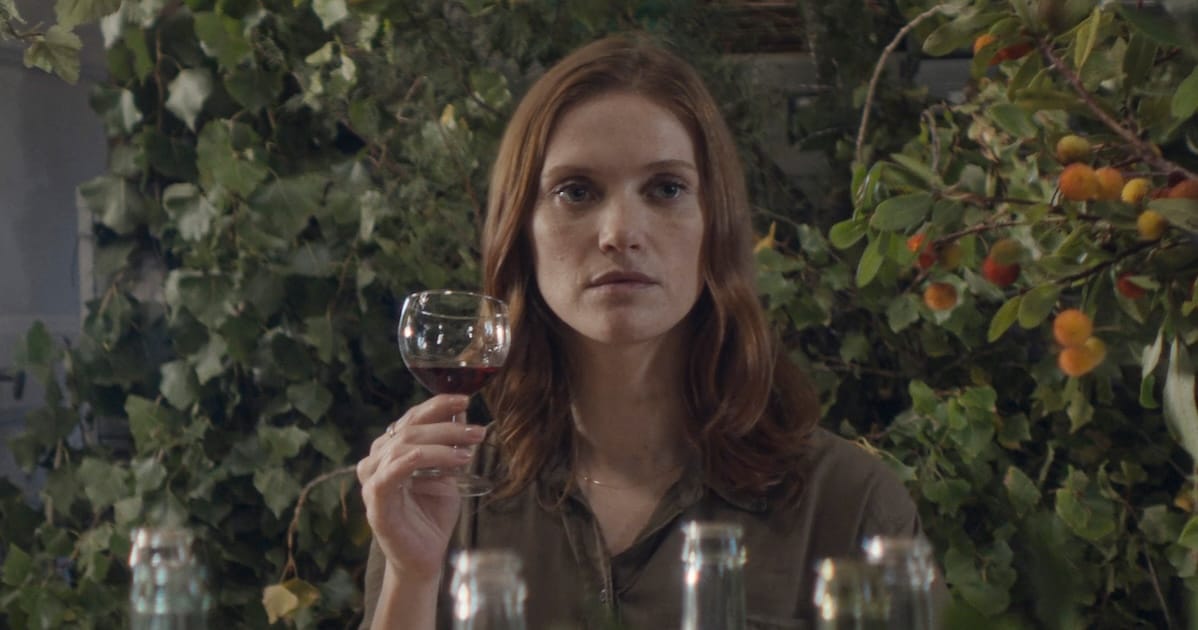
In the Apple series “Drops of God,” wine is all about legacy. For Camille Léger (Fleur Geffrier), it was once the primary (and mandatory) method of connecting with her overbearing father Alexandre, the namesake of a world-famous wine guide. At the start of the series, Alexandre has recently passed, leaving the control of his printing empire and impossibly large private collection in doubt. At first, Camille wants nothing to do with any of it, having borne the brunt of Alexandre’s demand that she follow in his footsteps from an early age. Childhood trauma and the mere whiff of wine are so intertwined that even sampling the slightest bouquet of a Syrah sends Camille into waves of nausea.
For many reasons that lay themselves bare over the course of the first “Drops of God” season, Camille switches from someone who rejects wine as a symbol of toxicity to someone whose appreciation of it becomes an elegant art form all its own. Much of that shift is due to the arrival of Issei Tomine (Tomohisa Yamashita), Alexandre’s presumptive heir apparent. As Camille’s repressed wine knowledge surfaces and the gap between her and her new rival narrows, “Drops of God” takes more creative liberties with how to show the sensation of taste on screen. Not merely content to have its audience watch cultural tastemakers sipping pricey Malbecs and waxing poetic about hints of green olive and teak, many of its episodes enter Camille’s mind palace, showing how a hyperactive mind uses precise details to bring order to sensory chaos.
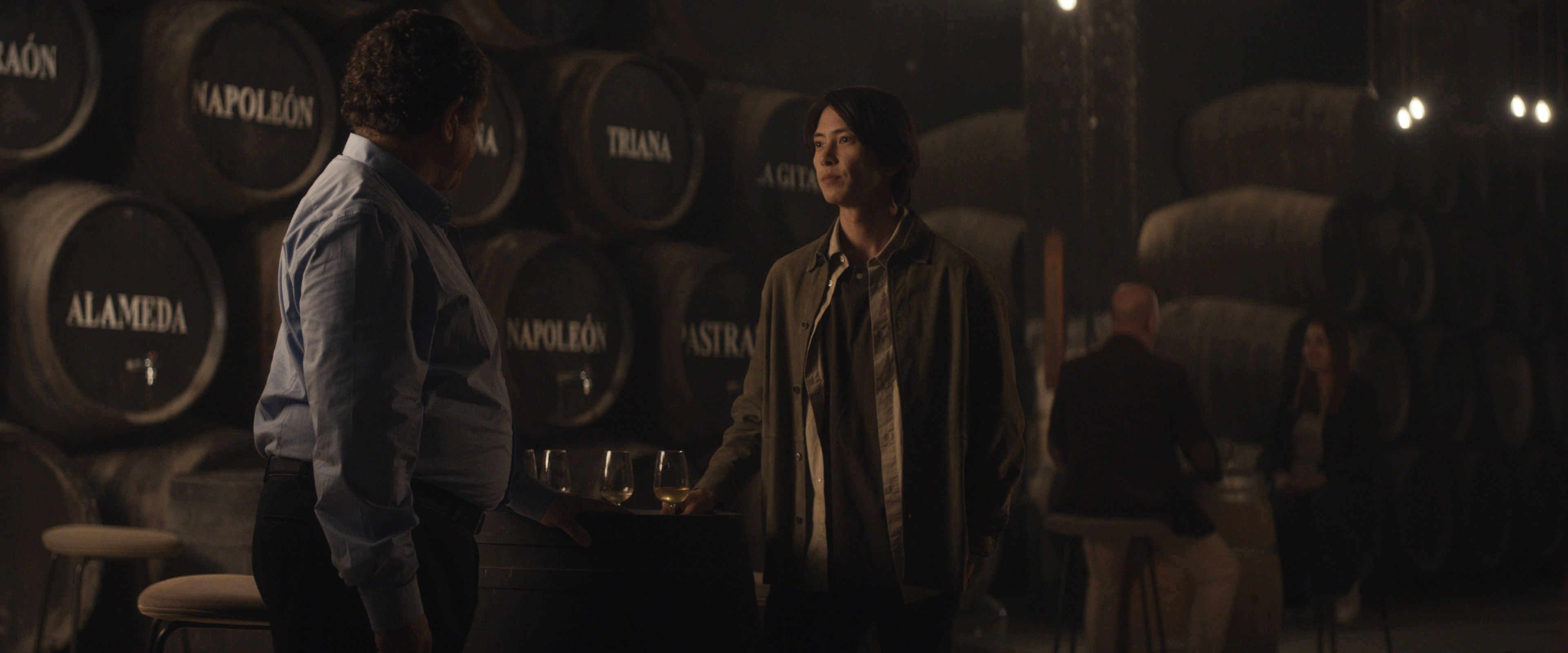
Tomohisa Yamashita in "Drops of God.”
In adapting the series’ first season — from a long-running manga written by Yuko and Shin Kibayashi and illustrated by Shu Okimoto — creator Quoc Dang Tran made this more than a simple translation from page to screen. Tran has had his hand in some of the most exciting French TV of the last decade. A staffer on the original “Call My Agent!” he then helped steer the fascinating horror series “Marianne,” which deserves an esteemed place in the “fictional author confronts the truth behind their most successful work” canon. Following that, he created “Parallels,” a perfect YA stepping stone for any younger viewer who wants to get a good sci-fi grounding before hopping to “Dark” or (*sigh* if they must) “Stranger Things.”
This TV version of “Drops of God” gender-flips the Camille role from the original source material. Instead of two young Japanese men asserting their place in the legacy of the man who guided both their lives, this is a story more directly rooted in cross-cultural understanding (or lack thereof). In the process, Tran also took a story about wine and zeroed in on one of the more dramatically rich ideas locked within its premise: If the consumption of truly great wine is an art, who should that practice belong to?
Camille becomes a complex, sometimes admittedly imperfect figure to help answer that question. She represents a shot across the bow of a space historically dominated by men. Even with her head start and the strain of nepotism in her eventual successes, Camille does give some credence to the idea that an appreciation of wine is something achievable rather than innate. Get the right person/team to help guide you through the process and the enigma becomes crackable.
[Light discussion of Season 2 follows, in case that’s the kind of thing you’d like to avoid before watching it. Either way, your choice is valid and I appreciate you.]
Now that a new season is well underway, it’s worth looking at how this show has taken a self-contained limited series idea and justified returning to these characters. (Tran did not return for these new episodes, but Oded Ruskin is back in the director’s chair, offering at least some visual consistency across all 16 chapters so far.) Camille and Issei, brought closer by the events of their head-to-head competition, are now comfortable existing as a cooperative unit. That closeness is put to the test by one final Alexandre test from beyond the grave: The two are presented with the most prized bottle in the Léger collection, a secret masterpiece of a vintage whose identity the late master was never able to figure out.
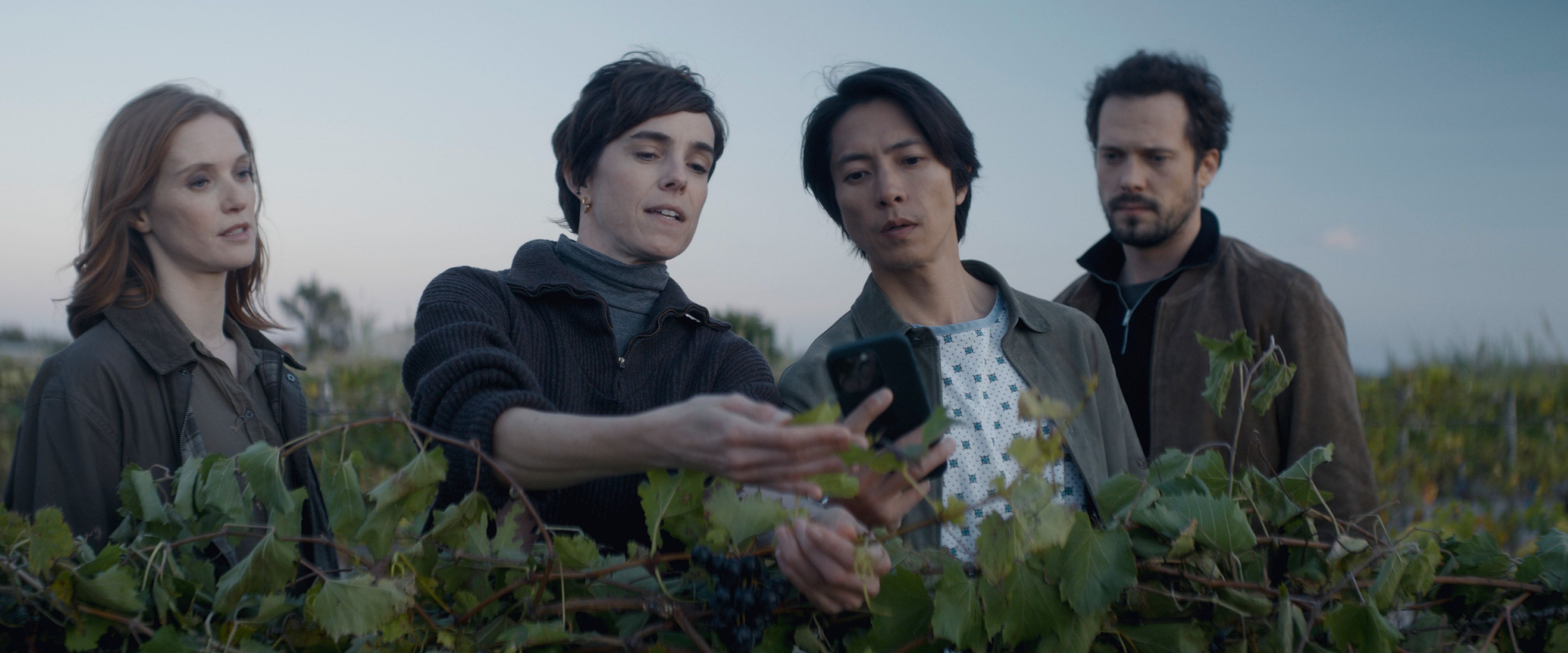
Fleur Geffrier, Carole Weyers, Tomohisa Yamashita and Tom Wozniczka in "Drops of God.”
That Season 2 premise makes it seem like it could turn “Drops of God” into a true travelogue, tracking Camille and Issei from country to country, globe-hopping in between sips of Old World chardonnays until they find the right one. These new episodes aren’t completely devoid of that, but it soon becomes clear that the solution to the mystery, while fascinating, is not as important as what comes after it.
Through this season, we’re confronted with the idea that perfection can be a curse just as much as it can be a pursuit. Perfection can also be unassuming, achieved through circumstances unimportant to the person or group engaged in it. When that pursuit gets tied to any kind of competition, that ultimate goal is so often intertwined with sacrifice and an unhealthy dose of self-promotion. (Hmmmmm, if only a Spanish show from last year spent eight episodes looking at the consequences of gamifying perfection.) “Drops of God” finds value in the direct opposite of that. There’s a reason this blissful transformative wine they seek remained elusive for so long. Its transcendence may be a direct result of not being made to fit within an existing wine world framework, something that makes it even more tantalizing and maddening for those throughout this season who seek to harness it for their own ends.
“Drops of God” is a show that could probably sustain a season-long grape quest, but this question of who wine should (and does) belong to is a far more satisfying use of its time and resources. Playing out in French, Japanese, English, and the other regional language(s) that become part of this mystery wine story, this is a global show that is actually trying to show both wine and television as pursuits that are enriched whenever they’re not limited to a single country’s output. So if the first-blush premise of “Drops of God” isn’t enough to convince you to watch a Wine Show, what about a Sprinklings of the Vampirism of Private Equity Show? Perhaps you’d like the Heavy Doses of Self-Doubt About the Idea of European Exceptionalism Show?
Regardless of the path in, “Drops of God” is an appeal to the senses. After the first season made so much of an attempt to translate the feeling of tasting something magical, Season 2 has far more examples of just watching someone in unexpected wine ecstasy. It’s the closest these new episodes get to a fantasy. You see it on the faces of characters who have dedicated significant chunks of their life to this one craft. Following Camille and Issei on their respective journeys, “Drops of God” gives the audience the chance to see how tastemakers handle a true wild card that threatens to upend the existing order.
As the season starts to crystallize, there’s another tantalizing question that comes with some of the clarity that Camille and Issei have been seeking: Even if it’s possible to some earthly creation to offer a brush with the divine, what obligation is there to ensure that others have the same opportunity that you’ve had? As the natural impulse to share and sustain collides headfirst with the greed of big business, “Drops of God” offers a sliver of hope that there might be something good and true in this world that can’t be commodified. There’s a small comfort in seeing those who are willing to walk away from immortality if it means retaining their soul.
New episodes of “Drops of God” Season 2 premiere through March 11 on Apple TV+.